

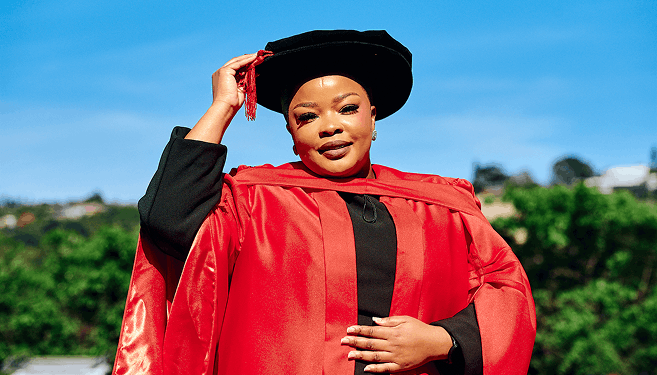
University of KwaZulu-Natal (UKZN) PhD graduate Dr Zandile Ngubane’s doctoral research in Applied Ethics examined the lived experiences of people with albinism and their families in South Africa, highlighting the harmful impact of cultural beliefs, stigma, discrimination, social exclusion and violence.
Ngubane conducted the research to better understand the realities faced by people with albinism and to contribute to greater awareness, inclusion and protection of their rights.
Her research journey began with an interest in advocating for people who are excluded and misunderstood or treated differently by society. It developed from her earlier studies on albinism and ultimately progressed into doctoral fieldwork, requiring careful attention to the ethical complexities of researching a sensitive and high-risk topic.
Ngubane’s study examined the experiences of people with albinism and their families through three ethical perspectives: consequentialism, limited communitarianism and rights-based theory. These approaches enabled her to consider the real-world harm caused by discrimination and violence, the responsibilities of communities and the fundamental rights to dignity, safety, and bodily integrity.
At the heart of the research is a challenge to harmful misconceptions that continue to shape how people with albinism are perceived and treated.
“One of the important things the research highlights is that people living with albinism are human; they are not ghosts or people whose blood or body parts can be used for umuthi or to generate wealth,” said Ngubane.
Her findings indicate that the challenges experienced by people with albinism extend across different aspects of life. Cultural myths can contribute to dehumanisation, while stigma and discrimination can affect safety, education, employment and social inclusion.
Ngubane’s research further suggests that addressing these challenges requires more than legislation and policies.
“Protecting people living with albinism requires more than simply having laws and policies in place,” she said. “There is also a need for changes in attitudes, greater community awareness and a stronger commitment to human dignity and inclusion.”
By drawing attention to the lived experiences of people with albinism and the beliefs that contribute to their exclusion, the research can support discussions about awareness programmes, policy development and interventions aimed at promoting their rights and wellbeing.
Ngubane’s work also highlights the importance of listening directly to people affected by the issues being researched. Speaking to people with albinism and their families provided deeper insight into their experiences, fears, hopes and resilience.
Through her research, Ngubane hopes to contribute to a society in which people with albinism are recognised for their humanity, protected from discrimination and violence and afforded the dignity, safety and inclusion they deserve.
Words: Sinoyolo Mahlasela
Photograph: Tisetso Nhlapo