

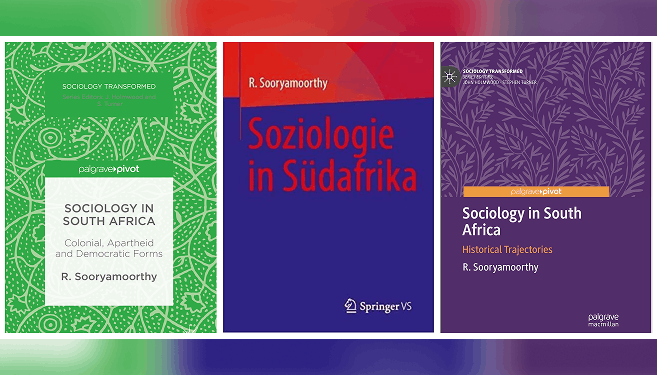
Radhamany Sooryamoorthy, Professor of Sociology and Fellow of the University of KwaZulu-Natal (UKZN), has published a completely revised edition of his book examining the history and development of sociology in South Africa.
Sooryamoorthy’s book titled: Sociology in South Africa, the 2026 publication provides a comprehensive historical and empirical account of South African sociology, examining the discipline as both a field of university teaching and an area of research. It explores how the country’s changing socio-political landscape – from colonialism and apartheid to democracy – has influenced the direction, priorities and development of sociological research.
The book is a substantially revised edition of Sooryamoorthy’s 2016 publication. The earlier edition attracted significant attention and was recognised as one of the most widely noticed books on sociology published under Palgrave Macmillan’s Sociology Transformed series. It was also translated into German.
The new edition incorporates data from the past decade, engages with more recent literature and introduces additional figures and tables. It also includes scientometric keyword analysis conducted using advanced scientometrics programmes, providing further insight into trends and patterns within South African sociological research.
Through historical and scientometric data, the publication traces the trajectories of sociology over more than a century and demonstrates how broader political and social developments have shaped the discipline’s research focus.
Sooryamoorthy said reflecting on the development of a discipline is important for understanding its future. “I find that it is critical for any discipline to take stock of what it has produced and it is producing to know its future. The history of South African sociology over a century provides insights into its disciplinary focus,” he said.
The book has also received praise from Professor Patrick Bond, Distinguished Professor of Sociology and Director of the Centre for Social Change at the University of Johannesburg. Bond described the publication as a valuable resource not only for sociologists but also for researchers and those working to bring about social change in South Africa.
The publication contributes to documenting the intellectual history of sociology in the country while providing researchers with an updated account of the discipline’s development, research trends and areas of focus.
Words: NdabaOnline
Images: Supplied