

A label can become so powerful that it begins to eclipse the person behind it.
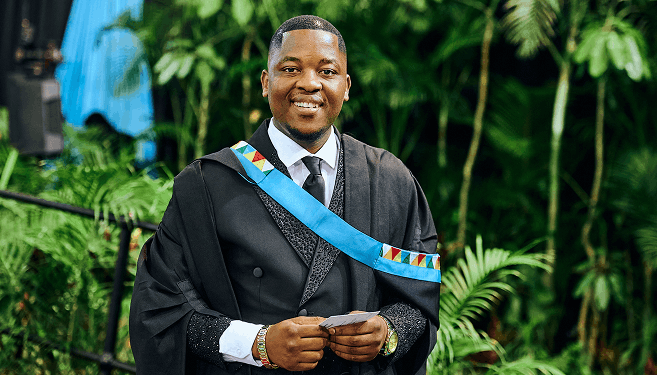
For social worker and researcher Mr Sibonelo Mchunu, this question lies at the heart of his master’s research at the University of KwaZulu-Natal (UKZN), where he explored stigma, recovery and self-identity among people labelled amaphara who access a harm reduction centre in Durban.
His dissertation: ‘Navigating Stigma, Recovery and Self-identity Among those Labelled as “Amaphara” Accessing a Harm Reduction Centre in Durban: A Qualitative Exploratory Study’, was completed under the supervision of Dr Bongane Mzinyane.
The term amaphara is commonly used in some South African communities to describe people associated with substance use, homelessness, street life or informal waste picking. Mchunu’s research investigated what happens when such a label becomes the lens through which a person is viewed – and, ultimately, how they may come to view themselves.
“What first drew me to this topic was seeing how quickly society can define a person by a label while overlooking the person behind it,” he said.
Through interviews with participants, Mchunu discovered that stigma operates not only through how people are spoken to, judged or excluded, but can also shape their own sense of dignity, confidence and identity. One conversation in particular stayed with him: a participant described how repeatedly being called iphara had changed both the way others treated him and the way he began to see himself.
“That was more than just a research interview, it was a reminder that behind every label is a human being with a story, pain, dreams and the possibility of change,” Mchunu said.
His findings also revealed the importance of supportive environments in the recovery process. The harm reduction centre provides access to social workers, nurses, healthcare services, food and sanitation facilities, while creating a space where people can be treated with dignity rather than judgement.
For Mchunu, recovery is therefore about more than overcoming substance use. It can also involve rebuilding dignity, confidence and identity.
His academic journey has reinforced a wider commitment to social change. Having worked as a social worker, researcher, tutor and residence assistant, he hopes his journey will encourage young people from communities such as Nongoma to recognise the opportunities education can create.
“Where you come from should never determine how far you can go,” he said.
Mchunu thanked his family for their unwavering support, Mzinyane for his guidance and mentorship, and UKZN for the opportunity to grow academically and professionally. He also acknowledged the Bellhaven Harm Reduction Centre, its staff and, most importantly, the participants who trusted him with their stories.
Words: Rakshika Sibran
Photograph: Sethu Dlamini