

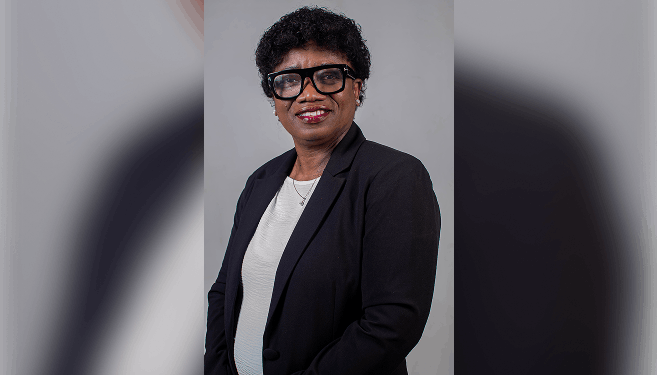
The University of KwaZulu-Natal’s (UKZN) Professor Beatrice Okyere-Manu was recently nominated to the UNESCO World Commission on the Ethics of Scientific Knowledge and Technology (COMEST) for the 2026-2029 term.
Okyere-Manu’s work at the UKZN School of Arts has centred on the intersection of applied ethics, environmental responsibility, population dynamics, and gender equity. This recognition reflects her outstanding scholarship and contribution to the field of ethics, particularly through her research in Environmental Ethics, Professional Ethics, Migration Ethics, and Ethical Issues Affecting African Women.
According to Okyere-Manu, UKZN fosters a vibrant environment of critical, decolonial scholarship that will directly enrich her contribution to COMEST. “The rigorous debates and research cultivated here provide the exact intellectual depth needed to evaluate how global technological trends impact communities on the African continent,” she said.
COMEST is an independent advisory body and a premier intellectual forum of reflection established by UNESCO in 1998. It is composed of 18 leading global experts, with great importance placed on maintaining a regional and geographic balance of membership. This diversity ensures a transdisciplinary and multicultural debate on the major ethical challenges stemming from rapid advances in science and technology. COMEST’s primary role is to formulate ethical principles and provide vital guidance and recommendations not only to UNESCO and its member states, but also to the scientific community, decision makers, civil society, and other key global stakeholders.
Okyere-Manu said that serving on an international body of this calibre is a humbling recognition of decades dedicated to ethical inquiry, education, and scholarship. “Professionally, it is a great milestone. It validates the important role of applied ethics in addressing real-world dilemmas. It also provides a platform to ensure African philosophical and ethical perspectives are actively represented at the highest levels of global discourse and policy making,” she said.
Okyere-Manu will be one of 18 members, with responsibilities involving actively participating in the multicultural, transdisciplinary forum of reflection to address complex ethical questions surrounding technological innovation. “Through this work, I will contribute to the discourse around the concrete ethical frameworks, guidelines, and policy recommendations that COMEST provides to international decision makers, scientists, and civil society.”
Okyere-Manu aims to bring a critical Global South perspective informed directly by her research niche across the ethics of technology and Artificial Intelligence (AI), relational ethics, environmental ethics, and population ethics. Much of contemporary technology and bioethics has historically been shaped by Western-centric paradigms. By drawing on African philosophical frameworks, indigenous knowledge systems, and African feminist ethical theories, she hopes to enrich COMEST’s deliberations. “My goal is to ensure that global ethical guidelines for emerging technologies, environmental sustainability, and demographic policies reflect inclusive, communal, and equitable values that safeguard human dignity and vulnerable communities worldwide.
“I strongly believe this appointment establishes a direct pipeline between UKZN and global policy-making arenas. It allows me to bring cutting-edge global debates and policy insights directly back into our classrooms and postgraduate supervision, exposing UKZN students to international ethical governance first-hand. It also enhances the global visibility of our academic programmes, opening potential pathways for international collaborative research, seminars, and student engagement in global ethics,” she said.
She urged emerging African scholars, and particularly her Ethics students, to never underestimate the global relevance of African intellectual traditions and their unique scholarly voice. “The world is actively grappling with unprecedented ethical crises, from climate change to algorithmic bias, and it urgently needs the nuanced, relational, and communitarian frameworks that African philosophy offers. I encourage you to remain rigorous, cultivate intellectual courage and integrity, and approach your research with the conviction that our scholarship does not just observe global conversations; it has the power to make significant contributions to them,” she said.
Words: Sinoyolo Mahlasela
Photograph: Supplied