

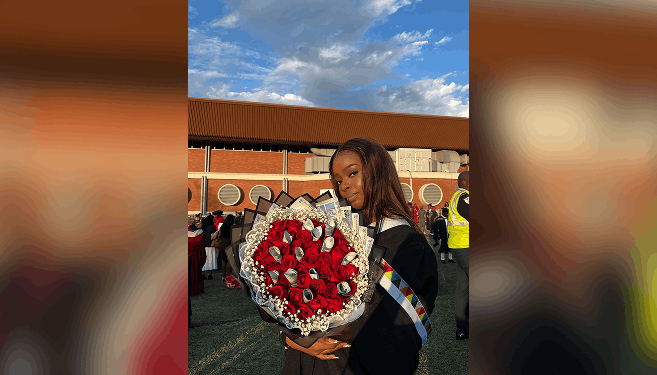
Ms Gugulethu Sibiya has graduated with a Master of Medical Sciences in Anatomy from the University of KwaZulu-Natal (UKZN), furthering her contribution to neuroscience research.
Supervised by anatomist Professor Lelika Lazarus and renowned neurosurgeon, Dr Rohen Harrichandparsad, Sibiya’s study, titled: ‘Traumatic Brain Injury: Assessing Serum ApoE and ApoA1 Profiles Across Injury Severities’, investigated changes in two important blood proteins following traumatic brain injury (TBI) and their potential role in supporting the assessment of injury severity.
For Sibiya, completing her master’s degree was an emotional and deeply rewarding achievement.
“Above all, I’m overjoyed and deeply grateful,” she said. “Getting here took real sacrifice, plenty of struggle and no shortage of tears, so having it all come together feels incredibly rewarding.”
Traumatic brain injury remains a major public health concern globally, with head injuries resulting from road traffic accidents, falls, violence and other traumatic events. Assessing the severity of a brain injury, however, can be challenging, particularly when patients are unconscious, intoxicated or unable to communicate effectively. In such circumstances, traditional assessment methods that rely on a patient’s physical or verbal responses may be difficult to apply.
Sibiya’s research focused on whether biological markers in the blood could provide additional information to support the early assessment of patients with TBI. She measured serum levels of apolipoprotein E (ApoE) and apolipoprotein A1 (ApoA1) in patients with moderate and severe traumatic brain injuries and compared these profiles with those of healthy individuals.
Her findings showed that levels of both proteins changed following moderate and severe TBI.
“These findings are significant because assessing the severity of a traumatic brain injury is not always straightforward,” said Sibiya. “Markers such as these could potentially offer a more reliable way to assess patients early and open the door to faster treatment.”
While her research does not claim to be the first of its kind, it contributes to research exploring the use of blood-based biomarkers in traumatic brain injury assessment. Sibiya’s interest in the field was inspired by her longstanding fascination with neuroscience and the complexity of the human brain.
“Neuroscience has always drawn me in,” she said. “So much of what society grapples with, including mental illness and neurological disorders, comes back to the brain. It is an enormous, ever-evolving field, and I wanted my work to have a real, practical impact on people’s lives.”
Completing the degree was not without challenges. Sibiya described her study experience as a “roller coaster”, marked by setbacks and emotional highs and lows. However, her faith, family and support network gave her the strength to persevere.
“Faith and prayers played a huge role in getting me through,” she said. “I also leaned heavily on my family and friends, who kept encouraging me whenever things became difficult.”
Raised in Empangeni, KwaZulu-Natal, with her brother and sister, Sibiya completed all three of her academic degrees at UKZN. She is now a PhD student and hopes to pursue a career in academia.
She expressed particular gratitude to her parents and wider family, as well as her friends and colleagues in the Department of Clinical Anatomy. She also acknowledged her supervisors for their guidance and support throughout her master’s journey.
Outside academia, Sibiya enjoys jogging, cooking, listening to music and binge-watching television series. Music, she said, was a constant companion while writing her dissertation.
Sibiya is the author of one published article, with further publications in progress, and is involved with the UKZN Neuroscience Group, which conducts community outreach aimed at raising awareness of mental health and neuroscience-related topics.
Lazarus and Harrichandparsad congratulated Sibiya: “It has been a privilege to supervise Gugulethu and witness her growth as a researcher. Her dedication, perseverance and genuine passion for neuroscience have been evident throughout her master’s journey. Despite the challenges she encountered, she remained committed to her research and demonstrated resilience, determination and an eagerness to learn.
Congratulations, Gugulethu, on this important milestone. We wish you every success as you continue your journey towards becoming an accomplished academic and researcher.”
Words: MaryAnn Francis
Photograph: Supplied