

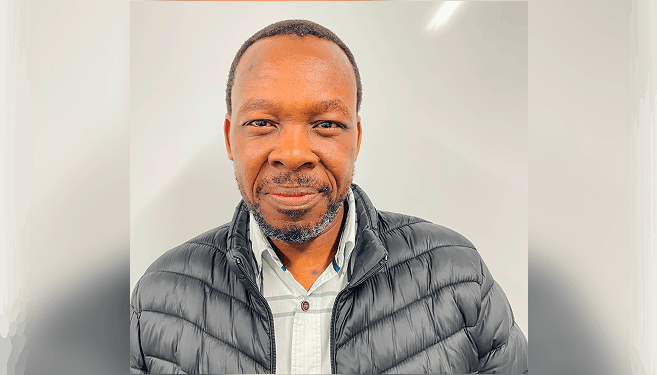
Professor Sithembiso Myeni delivered his inaugural lecture, titled ‘Transformative Innovation for Housing: Rethinking Urban Futures Beyond 2030’, at the University of KwaZulu-Natal (UKZN).
The lecture examined housing, inequality and innovation in South Africa, challenging traditional approaches to housing delivery and called for a fundamental transformation of the systems that shape human settlements.
Myeni holds a PhD in Development Policy and Management from the University of Manchester, alongside degrees from UKZN and the Durban University of Technology. His core research interests encompass local governance, state reform, political parties, and gender dynamics in service delivery. Prior to joining UKZN, he conducted extensive research for the Commission for Gender Equality, the National Democratic Institute, and Leverhulme Trust-funded projects on economic justice. Currently, his work explores the impact of rural housing subsidies and local government implementation on poverty reduction.
He opened his lecture by reflecting on rural upbringing. Drawing on memories of his grandparent’s home and community life, he explained that housing encompasses land, identity, livelihoods, kinship, education and social relationships. These experiences shaped his understanding of how people, institutions, resources and places interact to influence development.
Myeni argued that housing should be understood as a process of development. Beyond the physical structure of a house, housing encompasses the systems and relationships that enable access to shelter, services, security, employment opportunities, and social inclusion. “Housing is the foundation of dignity, the anchor of family life, the stage upon which our social and economic future is built,” he said, underscoring the central role housing plays in shaping people’s lives and opportunities.
Myeni argued that conquest, land dispossession and discriminatory legislation entrenched exclusion that continues to shape human settlements. He described housing as an instrument of domination and a symbol of unequal citizenship.
Myeni said that despite significant investment in housing since 1994, many South Africans continue to live in informal settlements and lack access to well-located housing. He argued that persistent deprivation reflects structural and institutional obstacles extending beyond housing delivery.
He called for a new approach that recognises housing’s role in economic inclusion, spatial justice, and democratic citizenship alongside its provision as a government service.
Drawing on mission-oriented innovation theory, which focuses innovation efforts on defined societal goals, Myeni compared housing with complex challenges such as climate change and public health. Each spans multiple sectors and requires co-ordinated institutional responses.
Myeni proposed measuring progress through reductions in housing deprivation over time, alongside the number of houses delivered. He said this requires co-ordinated action across land administration, infrastructure development, finance, planning, transport and governance.
He proposed a national housing mission to expand access to adequate, serviced and well-located housing and reduce housing deprivation over time. The mission would prioritise long-term social outcomes over administrative targets.
Myeni highlighted principles of transformative innovation policy, including a clear focus on societal goals, inclusion, experimentation, institutional learning and co-ordination. These principles support an approach that addresses the interconnected systems shaping housing.
He described technology as an important enabler whose effectiveness depends on institutional capacity, leadership and organisations’ ability to adopt and sustain new practices.
Myeni presented findings from research projects applying transformative innovation to housing. One involved developing a decision-support tool to improve co-ordination within South Africa’s human settlements sector.
“The tool enabled the sharing of information among government departments, contractors, engineers and beneficiaries in real time, helping to reduce fragmentation in housing delivery processes,” he said.
Another initiative, the Municipal Innovation Maturity Index, assessed municipalities’ readiness to innovate. “The findings showed that while many municipalities understood the value of innovation, implementation remained inconsistent, with only a small number demonstrating mature innovation capabilities,” he said.
These projects reinforced Myeni’s argument that technological and institutional innovation must work together to transform housing systems.
“The question is not only how many houses South Africa will build,” he said. “It is what kind of urban future our institutions can produce and whether that capability itself can build housing systems capable of creating more inclusive and sustainable futures beyond 2030.”
Speaking on behalf of the Vice-Chancellor and Principal, Professor Nana Poku, Professor Nhlanhla Mkhize, Deputy Vice-Chancellor and Head of the College of Humanities, highlighted the significance of inaugural lectures. He described them as opportunities to showcase professors’ research and teaching and formally recognise their appointment or promotion to full professorship.
Words: Sinoyolo Mahlasela
Photograph: Supplied