

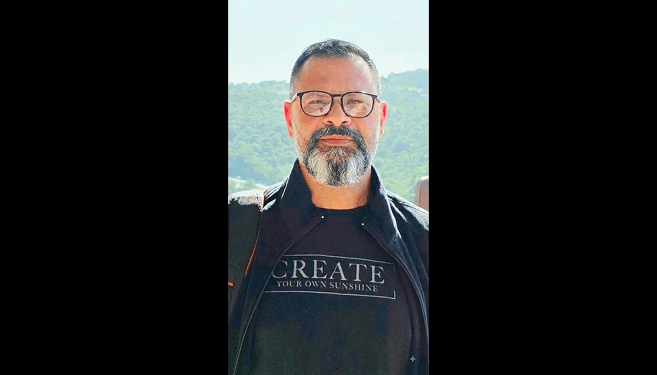
A new, freely accessible software platform developed by a University of KwaZulu-Natal (UKZN) professor is set to make computer-aided drug design faster, simpler, and more accessible to researchers and students worldwide.
“After almost two decades in drug design and molecular modelling research, challenges remained ever-present: the tools necessary are inaccessible, costly, fragmented, and technically demanding,” said Professor Mahmoud Soliman, from Pharmaceutical Sciences at UKZN.
“Researchers often need several different, expensive, and highly specialised programmes – each with its own steep learning curve – just to complete a single project. I built Drug Design Studio (DDS) to close that gap: one integrated, user-friendly platform that unifies the essential drug-design workflows, removes the fragmentation and makes advanced modelling accessible to any researcher or student, free of charge,” he said.
DDS provides practical, ready-to-use tools for researchers and students across medicinal chemistry, bioinformatics, biochemistry, pharmacology, molecular biology, genetics and genomics as well as anyone working in drug discovery, computational chemistry, and the life sciences more broadly. Its intuitive interface also makes it a valuable teaching and training resource for postgraduate and undergraduate students.
The first publication describing DDS recently appeared in the International Journal of Molecular Sciences, with further publications currently under review.
“Drug Design Studio is an all-in-one, cross-platform application (macOS and Windows) for drug design and bioinformatics that brings four powerful research modules together in a single, unified, easy-to-use environment,’ he said.
The modules are:
Module 1 – Molecular Docking and Virtual Screening: covalent and non-covalent docking and high-throughput virtual screening
Module 2 – Network Pharmacology: mapping compound-gene-disease relationships and biological pathways, including covalent targets and resistant mutants
Module 3 – 3D-QSAR and Pharmacophore Modelling: structure-activity analysis and pharmacophore-based design
Module 4 – Nano-Biopharmaceutical Modelling: drug encapsulation in nanocarriers and drug-drug complexation
Words: Lunga Memela
Photograph: Supplied