

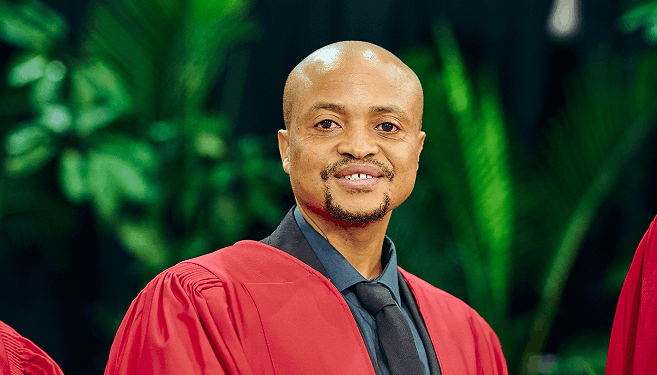
Orthopaedic surgeon and researcher Dr Phakamani Goodman Mthethwa graduated with a PhD from the University of KwaZulu-Natal (UKZN) on 15 September 2026.
Mthethwa, the founder and Head of the Clinical Unit of Orthopaedic Surgery at Dr Pixley Ka Isaka Seme Memorial Hospital and Acting Academic Head of Orthopaedic Surgery at UKZN’s Nelson R. Mandela School of Medicine, dedicated his doctoral research to understanding why some children with osteosarcoma respond poorly to chemotherapy.
His study, titled ‘Conventional Osteosarcoma of the Appendicular Skeleton in a South African Population: Response to Chemotherapy and Genetic Considerations’, was co-supervised by Professors Leonard Marais and Collen Aldous.
Osteosarcoma is an aggressive form of bone cancer that predominantly affects children and young people. Despite advances in treatment, poor response to chemotherapy remains a significant challenge and can negatively affect patient survival. Mthethwa explained that his interest in the research was driven by observations within the South African population.
“It is an incredible achievement that, for the first time in the African population, we identified genes responsible for poor chemotherapy response in osteosarcoma patients. This opens the door to therapeutic alternatives and innovations to improve patients’ future survival.”
He said osteosarcoma remained a particularly devastating disease because of its aggressive nature and the challenges associated with chemotherapy resistance.
“Osteosarcoma is a very aggressive cancer, and children end up perishing due to poor response to chemotherapy drugs, which is a global problem. However, in our population, we noticed that the poor response to chemotherapy was higher than that reported globally, and we thought that this may be due to the genetics of cancer,” he said.
“Our study aimed to determine whether our osteosarcoma genetics influence poor response to chemotherapy. This will ultimately improve our guidelines and patient survival,” Mthethwa said, stating that the research could pave the way for further investigation into personalised approaches to osteosarcoma treatment. He said the next step would be to conduct clinical trials aimed at developing personalised treatment strategies for patients with chemotherapy-resistant osteosarcoma.
Reflecting on his doctoral journey, Mthethwa highlighted the people and opportunities that supported his research. “The biggest highlights during my research journey were working with my amazing supervisors and UKZN genetics laboratory scientists, conducting laboratory work, and securing a Discovery Foundation grant through UKZN,” he said.
Mthethwa qualified as an orthopaedic surgeon in 2016 and has since developed a particular interest in bone tumours, infections and limb reconstruction. His academic qualifications include a Master of Orthopaedic Surgery, for which his research focused on ‘The Microbiology of Chronic Osteomyelitis in the Developing World’.
Beyond his clinical and academic responsibilities, Mthethwa is a member of the South African Orthopaedic Association (SAOA) and serves as Secretary of the South African Limb Preservation Society (SALPS).
A husband and father of four, Mthethwa describes himself as a passionate Christian who enjoys reading, sport and, perhaps fittingly for a busy surgeon and academic, sleep.
Words: Lunga Memela
Photograph: Sethu Dlamini