

Click here for isiZulu version
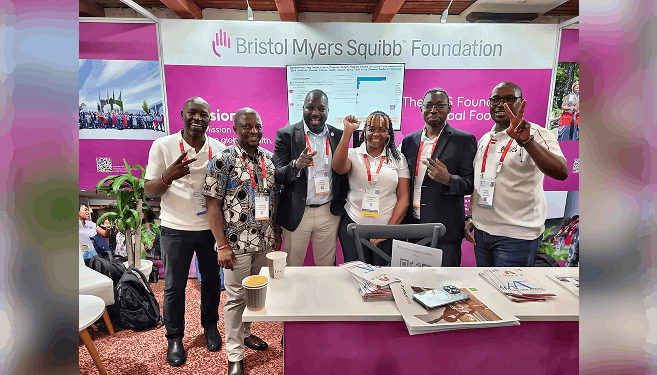
The Cancer and Infectious Diseases Epidemiology Research Unit (CIDERU) at the University of KwaZulu-Natal’s (UKZN) College of Health Sciences has secured a R16.45 million grant from the Bristol Myers Squibb Foundation (BMSF) to strengthen lung cancer prevention, early detection, diagnosis and care across KwaZulu-Natal.
The grant will fund the ‘Equitable Access to Quality Lung Cancer Care in KwaZulu-Natal’ initiative, which began on 1 May 2026 and will run until 30 April 2028.
Led by principal investigator Professor Themba Ginindza, the initiative brings together an interdisciplinary team and builds on CIDERU’s work through the Multinational Lung Cancer Control Programme (MLCCP). This collaborative programme aims to improve lung cancer outcomes and strengthen cancer care systems across Africa.
The initiative will strengthen the lung cancer care pathway through the Lung Cancer Diagnostic Unit (LCDU) at Addington Hospital in Durban.
A key priority will be reducing diagnostic backlogs and co-ordinating care to help patients move more quickly from diagnosis to appropriate treatment.
The programme will also expand cancer surveillance beyond Durban to the King Cetshwayo District Municipality, including Queen Nandi Hospital and Ngwelezane Hospital. This will support more comprehensive population-based cancer registration and provide valuable evidence to inform cancer control planning and resource allocation across the province.
Ginindza said the partnership with BMSF would build on CIDERU’s achievements and strengthen communities’ and healthcare systems’ capacity to respond to lung cancer.
“With BMSF’s continued support, we are not only able to improve early detection and diagnostic capacity, but also foster a healthcare environment that empowers local communities through cancer awareness and palliative care,” said Ginindza.
He said signing the funding agreement formalised the partnership and its commitment to sustained improvements in cancer care.
The initiative will also provide training for healthcare professionals and community leaders. Training will cover cancer awareness, recognising signs and symptoms, early detection and palliative care. It aims to support communities facing difficulties accessing specialised cancer services.
By strengthening knowledge and skills in communities and primary healthcare services, the programme aims to help patients access cancer services earlier and improve continuity of care.
The KwaZulu-Natal initiative forms part of the broader MLCCP, which seeks to address barriers across the lung cancer care pathway and improve access to early diagnostic services in sub-Saharan Africa.
The programme works with communities, healthcare institutions and ministries of health to develop cancer care pathways that are sustainable, contextually appropriate and responsive to local needs.
What began as a collaboration involving Eswatini, Kenya, South Africa and Tanzania has grown into a network spanning 10 African countries, with Ghana, Lesotho, Ethiopia, Malawi, Zambia and Zimbabwe joining the programme.
This regional network enables participating countries to share knowledge, strengthen research capacity and co-ordinate lung cancer prevention, diagnosis and care.
The programme aims to sustain improvements in diagnostic services, cancer surveillance, community awareness and healthcare capacity beyond the two-year funding period by integrating them into provincial health systems.
Words: Nombuso Dlamini
Photograph: Supplied