

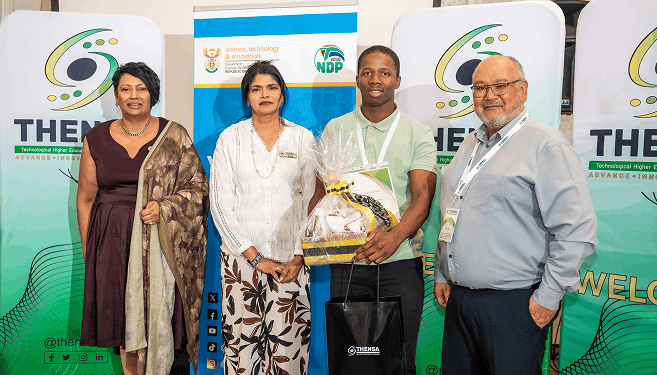
University of KwaZulu-Natal (UKZN) student Mr Luyanda Mchunu has won the Highest Growth Potential Business Innovation Award for his biodegradable plastics concept.
Mchunu received the honour during the six-day entrepreneurship training workshop funded by the Technology Higher Education Network South Africa (THENSA) and the Department of Science and Innovation (DSI).
Held in Durban, the workshop brought together 30 students from public universities across KwaZulu-Natal to develop their entrepreneurial skills, refine business ideas and explore innovative solutions to real-world challenges.
Mchunu was one of four UKZN students selected to participate in the programme. His presentation, ChitoNova, focused on developing biodegradable plastics from marine-derived materials as an alternative to conventional plastics, which contribute to environmental pollution and can take hundreds of years to break down.
He highlighted the growing threat posed by plastic waste to marine ecosystems and human health, noting that the high production costs of biodegradable alternatives remain a barrier to their widespread adoption.
His proposed solution involves extracting materials from marine sources, including seafood-processing waste, to produce biodegradable polymers for sustainable packaging. The concept aims to transform waste into useful products while reducing reliance on conventional plastics.
Mchunu identified packaging manufacturers and businesses-seeking, environmentally responsible alternatives as potential customers. He also emphasised the importance of developing locally produced materials suited to South Africa’s environmental conditions.
The award recognises the growth potential of his business innovation and highlights the role of student entrepreneurship in addressing environmental challenges through science, technology and sustainable business solutions.
Another UKZN participant, Ms Zekhethelo Gwala, presented ‘My Panic’, a technology-based personal safety solution designed to help students access assistance during emergencies.
‘My Panic’ combines a mobile application with a portable panic alarm. Users can activate an alert through the application, a phone widget, a shaking motion or a designated voice command. The system shares the user’s live location with selected emergency contacts and connects them to a network of safety marshals who can assist within university communities.
Gwala said the initiative focuses on concerns about student safety and delays in accessing emergency assistance. It also incorporates survivor-support services, connecting individuals affected by personal safety incidents with relevant support structures.
According to her presentation, ‘My Panic’ has established a network of 219 volunteer safety marshals and sold 200 alarms since beginning sales in March. The initiative is also pursuing institutional partnerships to expand access to its safety products.
Reflecting on the training, participants described the programme as informative and impactful, highlighting the opportunity to strengthen their business presentation skills, exchange ideas and build networks with aspiring entrepreneurs from other universities.
Mchunu thanked the organisers, saying the workshop had helped participants gain a better understanding of their businesses and how to present their ideas effectively. “It was a great programme. We learned more about our businesses and how to present them. We also met like-minded individuals, built networks and explored opportunities for collaboration,” he said.
Gwala said the experience had created valuable connections among young entrepreneurs. “I am grateful and honoured to have had this opportunity. The training has been very impactful and I have met many young people who are passionate about entrepreneurship. I feel that I have found friends who will support me on my journey as a young entrepreneur.”
The student also highlighted the potential for collaboration among universities in KwaZulu-Natal, noting that the connections established during the workshop could help create a stronger regional entrepreneurship network.
The achievements of Mchunu and Gwala demonstrate how student entrepreneurship can contribute to addressing pressing environmental and social challenges, while the workshop reinforced the importance of collaboration and skills development in nurturing the next generation of innovators.
Words: Nombuso Dlamini
Photograph: Supplied